
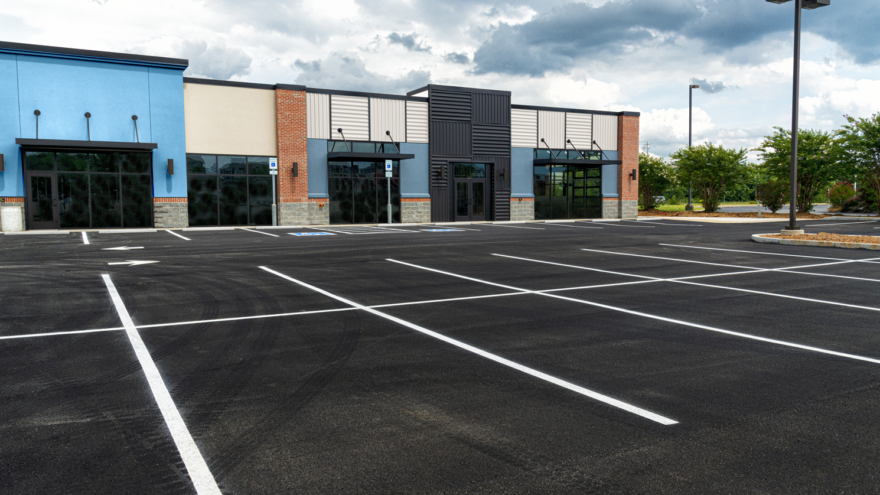
A parking lot is one of those “silent” parts of a property. When it is smooth and clean, nobody says a word. When it starts cracking, puddling, or breaking into potholes, everybody notices. Customers slow down and weave around damage. Employees complain. Delivery drivers leave ruts near the dumpster pad. And if someone trips near the entrance, it becomes a safety and liability headache.
If you manage property in Nassau or Suffolk County, you have another challenge: Long Island weather. Summer heat, coastal moisture, and winter freeze and thaw cycles can wear pavement faster than most people expect.
So how long does a paved parking lot last, and how do you extend it in a way that saves money?
A practical expectation for asphalt parking lots is often around 15 to 25 years, depending on traffic, drainage, and maintenance habits.
The good news is that preventive maintenance, done at the right time, can extend pavement life by an average of 5 to 10 years, according to FHWA.
Below is a simple, property owner friendly guide that explains what shortens parking lot life, what to do each year, and when it is smarter to resurface or replace instead of patching forever.
This topic is also a core service area for local contractors like Armorproof (Long Island commercial parking lot paving).
Typical lifespan of parking lot paving
Most parking lots fall into one of these buckets.
Light to moderate traffic lots
Office buildings, small retail, medical offices, and smaller apartments, lots usually see longer life when the lot is built correctly and maintained. A common expectation is roughly 15 to 25 years.
High traffic and heavy load lots
Shopping centers with constant turnover, lots with frequent deliveries, and areas that see box trucks and dumpsters tend to wear faster. In these properties, the “high stress zones” can need major work earlier than the rest of the lot.
Lots of drainage problems
If water sits after rain, expect the lot to age faster. Standing water and winter freezing are a damaging combo. Even a newer lot can fail early if the pitch and drainage are wrong.
Quick takeaway: a lot rarely fails because it “hit an age.” It fails because water and traffic get into weak areas, then spread the damage season after season.
What shortens a parking lot’s life in Long Island
Freeze and thaw cycles
Small cracks let water in. When water freezes, it expands. That expansion widens cracks and breaks edges. Repeat this over many winter days and you get potholes.
Coastal moisture and repeated wet conditions
Longer damp periods can keep the pavement and base saturated, especially in shaded areas and low spots. Wet bases lose strength over time.
Heavy turning movements
Drive lanes, entrances, exits, and tight corners take more stress than straight parking stalls. The same is true near loading zones and dumpsters.
Oil and fuel drips
Oil can soften asphalt. You usually see this near frequent parking spots and truck areas.
Delayed crack repair
Once cracks open, water has a direct path into the base. If the base is damaged, surface patching becomes a repeating bill.
The parking lot life cycle, what most owners experience
Years 0 to 2: New pavement, protect it early
This is when your lot is in its best condition. It is the best time to set up a plan because early protection costs less than late repairs.
Years 2 to 7: Prevention phase, biggest return on investment
This is where crack sealing and sealcoating can save the most money. Small cracks are easy to treat. Small drainage issues can be corrected before they become pothole factories.
Many contractors recommend sealcoating asphalt about every 2 to 3 years, with the exact timing depending on traffic and exposure.
Years 7 to 15: Repair and refresh phase
You may see more cracking, localized potholes, faded appearance, and low spots that hold water. A good plan at this stage is targeted repairs plus a protective schedule.
Years 10 to 20 plus: Resurface or rebuild decisions
If the base is still strong, resurfacing options can extend service life and delay a full rebuild. FHWA performance summaries show service life extensions in a wide range depending on the treatment and conditions.
If the base is failing, replacement is often the only long-term fix.
How to extend your paved parking lot’s life (practical plan)
Here is a simple maintenance plan that many property managers can follow without overthinking.
1) Make drainage your number one priority
If water sits, damage accelerates. Walk your lot after heavy rain and take notes.
Look for:
- puddles that remain after a few hours
- water flowing toward entrances or sidewalks
- low spots near catch basins
- water collecting at the curb line
Fixing low spots and correcting pitch often saves money because it prevents repeat failures in the same area.
2) Crack seal early, especially before winter
Crack sealing is one of the most cost-effective actions because it blocks water entry. FHWA notes that preventive maintenance can extend pavement life by an average of 5 to 10 years when applied at the right time on pavements mostly in good condition.
A simple rule: if you can see a crack forming, do not wait for it to “get worse.” You want to stop water before freeze season.
3) Sealcoat on a realistic schedule
Sealcoating is not a structural repair, but it is a good protective step when the pavement is still in decent shape and cracks are treated first. Many parking lot maintenance guides recommend sealing about every 2 to 3 years for typical conditions.
A helpful way to think about it:
- crack sealing protects the structure
- Sealcoating protects the surface and slows aging
4) Repair potholes properly, not just quickly
Potholes are safety risks and they get worse fast. If you see potholes returning in the same area, you are likely having base and drainage trouble. In those spots, you may need a deeper repair instead of another thin patch.
5) Reinforce high stress zones
Not all parts of the lot take the same beating. A smart plan focuses on:
- dumpster pads
- loading and delivery zones
- entrances and exits
- tight turning corners
- main drive lanes
This is where a good parking lot paving company can help you plan thickness and materials, so you do not overbuild the entire lot, but you do strengthen the areas that fail first.
6) Keep the surface clean and easy to inspect
Sweeping and basic cleaning help you spot cracks early, reduce grit that wears the surface, and prevent debris from clogging drainage.
When it is smarter to resurface or replace
Owners often ask, “Should I keep repairing, or do I need to repave?”
Use these simple signals.
Sealing and repairs usually make sense when
- cracks are narrow and not everywhere
- the lot is mostly level
- potholes are isolated
- puddling is limited to a few fixable low spots
Resurfacing often makes sense when
- the surface is worn and cracked, but stable
- the base still feels firm
- you want a “reset” without full reconstruction
Replacement is usually needed when
- alligator cracking is widespread
- patches keep failing in the same areas
- there are soft spots, rutting, or major settlement
- drainage problems are severe and structural
A New York note for sealing and compliance
If your plan includes sealcoating, be aware that New York has restrictions related to coal tar-based pavement sealers. The NYS Department of Environmental Conservation explains the rules and definitions around coal tar in pavement products.
If you manage a commercial property, it is reasonable to ask what type of sealer will be used and whether it meets New York requirements.
What to ask parking lot paving companies before you hire
Whether you are calling one parking lot paving company or comparing multiple parking lot paving companies, these questions protect your budget.
- How will you handle drainage and pitch, so water flows correctly?
- What areas will you reinforce for heavy loads like dumpsters and deliveries?
- What prep is included before sealcoating or resurfacing (crack filling, cleaning, oil spot treatment)?
- How will you phase the job to keep tenant or customer access open?
- What is included in the price, and what is considered extra?
- What workmanship guarantee is offered, and what does it cover?
Clear answers usually mean better planning and fewer surprises.
Final takeaway
A paved parking lot can last a long time, but it needs the right habits:
- keep water moving with proper drainage
- seal cracks early, especially before winter
- sealcoat as protection, not as a cover up
- focus repairs on high stress zones
- plan to resurface before the lot reaches full failure
If you are looking for a local Long Island contractor that provides commercial parking lot paving, Armorproof lists parking lot paving as a service area and is based in Ronkonkoma, NY.