
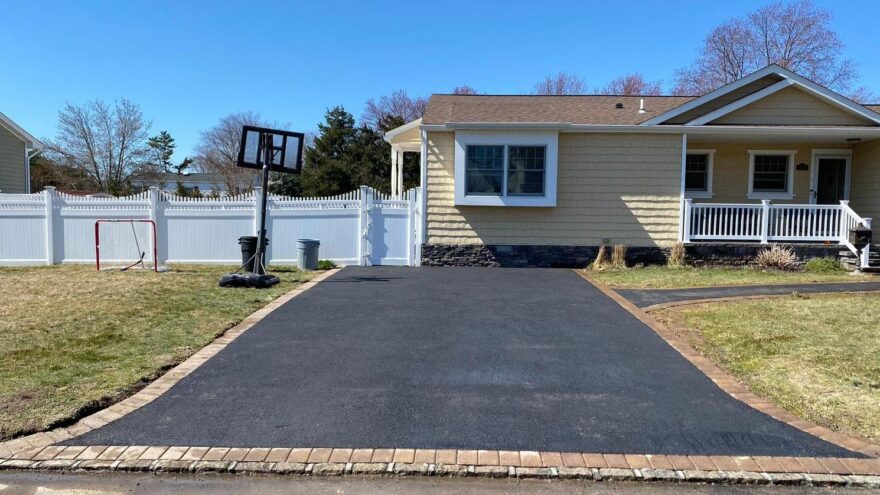
If you are searching for asphalt paving Long Island, you are probably looking at a driveway, apron, or parking area that is cracked, faded, or starting to dip in spots. On Long Island, asphalt work is not just about getting a fresh black surface. It is about building a pavement system that can handle heavy rain, daily vehicle load, and freeze and thaw cycles that turn small weaknesses into potholes.
We provide paving with a long-term mindset for homeowners and property managers across Suffolk and Nassau County Long Island. We specialize in paving, asphalt, masonry, and driveways, and we aim for one standard: excellent work that holds up.
Why asphalt is a smart choice on Long Island
Asphalt remains one of the most popular driveway surfaces in New York for a simple reason: it is durable, repairable, and often more budget-friendly than concrete. Cost guides commonly place asphalt driveways in a lower overall price band compared with concrete, especially for full replacements.
That said, Long Island asphalt fails early when contractors rush the foundation. Most “bad asphalt” complaints are really “bad base” or “bad drainage” problems. If water gets into the base and freezes, it expands and starts breaking the structure from below.
What asphalt paving should include, not just the top layer
A driveway that looks smooth can still be a weak build if the base is thin, soft, or poorly compacted. A proper asphalt paving job is a process, usually including:
- Site evaluation for grading and drainage
- Excavation to the right depth for your soil conditions
- A compacted stone base that supports the asphalt
- Proper pitch so water does not sit or flow toward the home
- Asphalt installed at the correct thickness for the use case
- Clean edges and transitions at aprons, walkways, and garage entrances
You will even see local Long Island contractors reference excavation depths in the 8 to 10 inch range depending on conditions and freeze thaw concerns, which shows how strongly base prep matters in this region.
Asphalt driveway cost on Long Island: what influences pricing
Pricing varies by property and scope, but national cost ranges help homeowners sanity-check estimates. One 2026 cost guide notes a typical range for new asphalt driveway installation, with examples based on common driveway sizes and total project cost. Another cost reference commonly cited by homeowners puts asphalt driveway installation in a per square foot range that depends heavily on thickness, prep, and site complexity.
On Long Island, your final number usually depends on:
- Excavation needs and soil conditions
- Base thickness and material required
- Drainage corrections, grading, or culvert work
- Access, removal, and disposal logistics
- Thickness needed for heavier vehicles or frequent traffic
A low quote is often low because something is missing from the scope. The most common omissions are base depth, compaction steps, and drainage fixes.
The timing mistake that ruins good asphalt
Cold-weather paving is one of the fastest ways to end up with weak compaction and early cracking. Industry guidance often points to temperature thresholds because asphalt must be compacted properly before it cools too much.
A paving industry article often referenced in contractor guidance explains the risk of paving in cold conditions and highlights why finishing before about 50 degrees Fahrenheit helps compaction quality and reduces cracking risk.
A simple way to say it is this: asphalt needs heat to be workable and compactable. Good scheduling protects your investment.
Resurfacing vs replacement: which is right?
Homeowners ask this constantly because resurfacing can be cheaper than full replacement. The right answer depends on what is happening underneath.
Resurfacing or overlay can make sense if:
- The base is still solid
- The driveway is mostly level
- Cracking is minor and not widespread structural failure
Full replacement is usually the better call if:
- You have widespread alligator cracking
- Multiple low spots and drainage pooling
- Edges crumbling or the surface is breaking apart
- The base is failing and moving
If the base is failing, a new top layer can look great for a short time, then the same dips and cracks return quickly.
Maintenance that extends asphalt life on Long Island
Long Island winters and UV exposure both take a toll. The goal of maintenance is to keep water out and slow oxidation.
Sealcoating guidance varies by contractor, but many pavement maintenance sources commonly recommend sealcoating in the 2 to 3 year range depending on exposure and wear.
Here is a practical homeowner approach:
- Repair cracks early before water reaches the base
- Keep edges supported, especially where the driveway meets soil or landscaping
- Maintain drainage so water does not pond
- Consider sealcoating on a schedule based on your driveway’s sun exposure and traffic
A Long Island contractor education page describes how freeze and thaw worsens cracks once water penetrates, which matches what we see locally every winter.
What to ask an asphalt paving company on Long Island
If you want your driveway to stay smooth after the first winter, ask these questions before you sign:
- How deep will you excavate and what base thickness will you install
- What base material are you using and how will you compact it
- How will you handle pitch and drainage, especially near the garage and foundation
- What asphalt thickness are you installing and is it one lift or multiple lifts
- What is included in the written scope, including removal, disposal, and cleanup
A professional Long Island paving contractor will answer clearly and include these details in writing, not just verbally.
Ready to upgrade your driveway the right way
If you are looking for asphalt paving Long Island services in Suffolk or Nassau County, we are ready to help with new installs, resurfacing, and repairs, plus matching masonry and paver work so your whole exterior looks cohesive.