
TL;DR
Good paving for driveways is not just about making the front of your home look better. It is about creating a strong, safe, well-drained surface that can handle daily vehicles, Long Island weather, and years of use.
For Long Island homeowners, the main driveway paving options are asphalt, concrete, and interlocking pavers. Asphalt is practical and cost-effective, concrete gives a clean and durable finish, and pavers offer a premium look with easier spot repairs. The right choice depends on your budget, drainage, curb appeal goals, and how the driveway is used.
Before hiring a contractor, ask about excavation, base prep, drainage, asphalt or concrete thickness, edging, driveway aprons, and long-term maintenance.
Why driveway paving matters
Your driveway does more than hold cars. It is one of the first things people see when they arrive at your home. A clean, smooth driveway can improve curb appeal, make parking easier, reduce mud and puddles, and create a more finished entrance to your property.
But if the driveway is cracked, sunken, uneven, or full of potholes, it can make the entire home look older than it is. More importantly, damaged driveway paving can create water problems, tripping hazards, and repeated repair bills.
On Long Island, driveway surfaces have to work harder than many homeowners realize. They deal with summer heat, heavy rain, coastal moisture, winter freeze and thaw, snow shoveling, plows, and de icing salt. That is why proper installation matters.
As a simple contractor-style rule:
“A driveway should not only look good on day one. It should still drain, support weight, and stay safe after the first winter.”
That is the difference between a quick surface job and a well-built driveway.
Main options for paving driveways
There is no single best driveway material for every home. The best choice depends on your budget, style, property layout, and maintenance expectations.
The three common choices are:
- Asphalt
- Concrete
- Interlocking pavers
Each has benefits and trade-offs.
1. Asphalt driveway paving
Asphalt is one of the most popular choices for driveway paving in Long Island. It gives a smooth black finish, works well for larger driveways, and usually costs less than pavers or decorative concrete.
Best for:
- Long driveways
- Homeowners who want a practical cost
- Traditional residential driveways
- Properties needing a clean, smooth surface
- Driveways that may need future resurfacing
Benefits of asphalt:
- Smooth finish for cars and walking
- Usually more affordable than premium materials
- Faster installation than many decorative options
- Good performance in colder climates when maintained
- Can often be repaired or resurfaced later
According to Angi’s asphalt driveway cost guide, new asphalt driveway installation commonly falls around $7 to $13 per square foot, depending on labor, grading, site conditions, and location.
Things to consider:
Asphalt needs maintenance. Cracks should be filled early, drainage should be controlled, and sealcoating may be needed over time. Asphalt is durable, but it is not a “set it and forget it” surface.
If water sits on asphalt or gets under the surface, freeze and thaw cycles can speed up cracking and pothole formation.
2. Concrete driveway paving
Concrete gives a clean, solid, and long-lasting look. It is a popular choice for homeowners who want a lighter surface color or a more structured finish.
Best for:
- Clean modern driveways
- Garage slabs and transitions
- Walkway and driveway combinations
- Homes where a lighter color fits the exterior
- Decorative finishes, including stamped concrete
Benefits of concrete:
- Strong and durable when installed correctly
- Clean appearance
- Can be finished in different textures
- Works well with walkways, patios, and slabs
- Decorative options are available
Armorproof lists concrete paving and repair services as part of its Long Island paving and masonry offerings.
Things to consider:
Concrete can crack over time, especially if the base, drainage, control joints, or reinforcement are not handled properly. Repairs may be more visible than asphalt or paver repairs because color and texture can be hard to match.
For Long Island homes, ask your contractor how they handle control joints, drainage, thickness, and freeze-thaw conditions.
3. Interlocking paver driveways
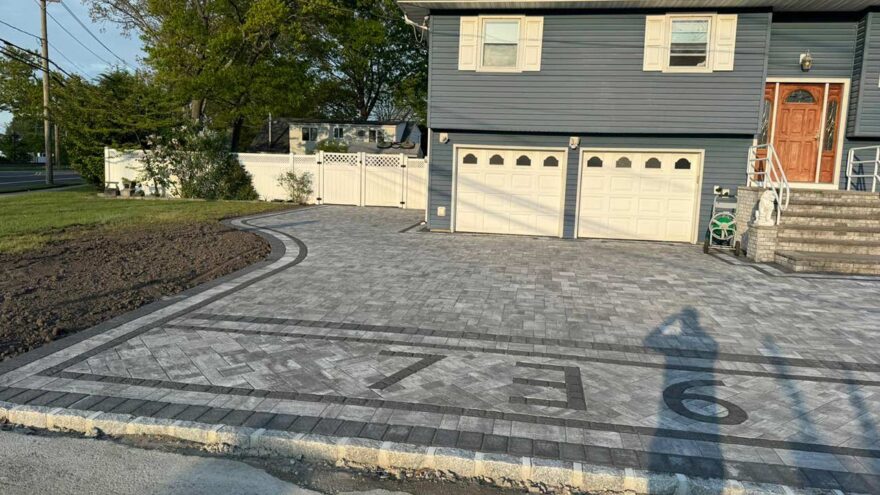
Pavers are often chosen when curb appeal is a top priority. They come in different shapes, colors, and patterns, making them ideal for homeowners who want a high-end look.
Best for:
- Premium driveway designs
- Front entrance upgrades
- Homes with patios or walkways that need to match
- Driveways where spot repairs may be useful
- Decorative borders and apron designs
Benefits of pavers:
- Strong curb appeal
- Many design choices
- Easier section-by-section repairs
- Good for borders and custom patterns
- Can match patios, walkways, and garden paths
Things to consider:
Pavers need a strong compacted base and proper edge restraints. If the base is weak, the pavers can shift or settle. Joint sand may also need occasional maintenance.
A paver driveway can look beautiful, but the quality of the base decides how well it performs.
What affects driveway paving cost?
Driveway paving cost can vary a lot because every property is different. The material is only one part of the price.
Common cost factors include:
1. Driveway size
A larger driveway uses more material and labor. A long driveway, circular driveway, or wide multi-car driveway will cost more than a small single-car driveway.
2. Existing driveway removal
If the old asphalt, concrete, gravel, or pavers need to be removed, that adds labor, equipment, hauling, and disposal.
3. Base condition
The base is one of the most important parts of the job. If the existing base is weak, wet, or uneven, it may need to be rebuilt. This can increase the cost, but it helps prevent future sinking and cracking.
4. Drainage problems
If water runs toward the garage, foundation, or low spots, the contractor may need to correct the grade or add drainage support. This is especially important on Long Island because rain and freeze-thaw conditions can make water problems worse.
5. Driveway apron and edging
Driveway aprons, Belgian blocks, curbs, and edge restraints can improve the finished look and help protect the surface. These details may add cost, but they can also improve durability and curb appeal.
Armorproof lists driveway aprons, Belgian blocks, site excavation, masonry drainage, asphalt paving, concrete paving, and outdoor hardscaping among its services. Internal link: Paving & Masonry Services
6. Material choice
Asphalt, concrete, and pavers all have different price ranges. Asphalt is often the most cost-effective for larger driveways. Concrete can cost more depending on thickness and finish. Pavers usually cost more upfront but provide a premium look and easier localized repairs.
Why base preparation is the hidden key
Most homeowners look at the top surface, but contractors know the base is where the real strength comes from.
A proper driveway paving project may include:
- Removing the old surface
- Excavating weak or unsuitable material
- Installing the correct base material
- Compacting the base properly
- Creating the right slope for drainage
- Installing the driveway surface
- Finishing edges and transitions
- Cleaning the site
If the base is skipped or rushed, even expensive materials can fail.
As one practical quote goes:
“The surface gets the attention, but the base carries the weight.”
That is why a detailed quote should explain what happens underneath the driveway, not just what goes on top.
Drainage: the part homeowners should never ignore
Water is one of the biggest reasons driveways fail early.
Poor drainage can cause:
- Puddles
- Cracking
- Sinking
- Edge breakdown
- Ice patches in winter
- Garage or foundation water issues
- Repeated potholes
A good contractor should inspect how water moves across your property. They should explain whether the driveway needs regrading, drainage support, a better apron, or edge correction.
For Long Island homes, drainage is not optional. A driveway that looks perfect but holds water is not a good investment.
How to choose a driveway paving contractor
Choosing the right contractor matters as much as choosing the right material.
Before hiring anyone, ask:
- Are you licensed and insured?
- Do you work in Nassau and Suffolk County?
- What driveway material do you recommend for my property and why?
- Will you remove the existing driveway or pave over it?
- What base preparation is included?
- How will you handle drainage and slope?
- What thickness will the asphalt or concrete be?
- What edging or apron work is included?
- How long before I can use the driveway?
- What maintenance do you recommend?
- What does your warranty cover?
A trustworthy contractor should explain the process clearly. If the answers are vague, the quote may be incomplete.
Red flags to avoid
Be careful if a paving contractor:
- Gives a final quote without seeing the driveway
- Cannot explain base preparation
- Ignores drainage questions
- Offers a very low price with no written scope
- Says every driveway can simply be paved over
- Pushes one material without explaining options
- Cannot provide insurance information
- Uses pressure sales tactics
- Does not explain curing or maintenance
The cheapest quote can become the most expensive if the driveway fails early.
Maintenance after driveway paving
A new driveway should still be maintained. Maintenance protects the surface and helps delay bigger repairs.
For asphalt driveways:
- Keep the surface clean
- Fill cracks early
- Avoid standing water
- Repair potholes quickly
- Sealcoat when appropriate
- Avoid sharp turns from heavy vehicles when the asphalt is new
For concrete driveways:
- Clean stains early
- Watch for cracks
- Keep joints clear
- Avoid harsh de icing products where possible
- Reseal decorative finishes when recommended
For paver driveways:
- Sweep regularly
- Refill joint sand when needed
- Remove weeds early
- Reset sunken areas quickly
- Keep edge restraints in good condition
The Federal Highway Administration notes that preventive pavement maintenance, when done at the right time, can extend pavement life by an average of 5 to 10 years.
When should you replace instead of repair?
Repair may be enough if your driveway has minor cracks, isolated potholes, or surface wear. Replacement may be smarter if the damage is widespread.
Consider replacement if you see:
- Large spiderweb cracking
- Repeated potholes in the same area
- Major sinking or soft spots
- Water pooling after every rain
- Edges breaking apart
- Old repairs failing again and again
A good contractor should help you decide whether repair, resurfacing, or replacement makes the most sense.
Why local Long Island experience matters
Long Island driveways have local challenges. A contractor who works in the area will better understand drainage patterns, coastal moisture, winter damage, apron transitions, and local property layouts.
Armorproof is based in Ronkonkoma and serves Long Island, including Nassau and Suffolk County. The company provides residential and commercial paving and masonry services, including driveway paving, asphalt driveways, concrete paving, patios, walkways, driveway aprons, site excavation, Belgian blocks, and masonry drainage.
Final thoughts
Good paving for driveways starts with the right material, but it does not end there. The real value comes from proper excavation, base preparation, drainage, compaction, finishing, and maintenance.
Asphalt is practical and cost-effective. Concrete is clean and durable. Pavers offer a premium look and flexible repairs. The best option depends on your home, budget, and how you use the driveway.
Before you hire a contractor, ask about the process, compare written estimates, and make sure drainage is part of the plan.
For Long Island homeowners researching driveway paving, Armorproof’s driveway paving page is a helpful place to start: Driveway Paving Long Island
FAQs
What is the best paving for driveways?
The best paving depends on your budget, style, and property conditions. Asphalt is often best for cost-effective driveway paving. Concrete is good for a clean, durable look. Pavers are best for premium curb appeal and easier spot repairs.
How much does driveway paving cost?
Cost depends on driveway size, material, removal, base condition, drainage, and finishing details. National cost guides commonly list asphalt driveway installation around $7 to $13 per square foot, but local pricing can vary.
Is asphalt or concrete better for driveways?
Asphalt is usually more affordable and works well in colder climates when maintained. Concrete gives a clean, solid look and can be decorative. The better choice depends on your budget, style, and maintenance expectations.
Are pavers good for driveways?
Yes, pavers can be a strong and attractive driveway option when installed over a proper base with good edge restraints. They usually cost more upfront but offer design flexibility and easier section-by-section repairs.
Why does drainage matter for driveway paving?
Poor drainage allows water to sit on or under the driveway. This can cause cracks, potholes, sinking, ice patches, and edge breakdown. Good drainage helps the driveway last longer.
Can a new driveway be installed over an old one?
Sometimes, but only if the existing surface and base are stable. If there are major cracks, sinking areas, potholes, or drainage problems, removing and rebuilding the base may be the better long-term option.
How long does driveway paving last?
Driveway lifespan depends on material, installation quality, drainage, traffic, and maintenance. A well-installed and well-maintained driveway will usually last much longer than one installed over a weak base or poor drainage.